What just happened
Between 9 and 23 December 2025, Romania made a clear political choice:
- On 19 December, President Nicușor Dan publicly confirmed Romania’s support for the EU–Mercosur agreement, stating that earlier concerns had been resolved.
- This endorsement came as the EU postponed the planned 20 December signature of the deal, pushing it into early January 2026 due to unresolved opposition among member states.
- In parallel, EU institutions rushed through new agricultural safeguard mechanisms to contain resistance—particularly from France and Italy.
Romania’s statement placed it firmly inside the pro-trade camp at a moment when EU unity on trade policy is visibly fraying.
Why the EU–Mercosur deal hit turbulence
The turbulence is not rhetorical; it is procedural and political.
1. France and Italy remain unconvinced
- France has reiterated it is “not ready” to sign, arguing the deal does not sufficiently guarantee reciprocity on production standards (pesticides, animal welfare) or enforceable controls.
- Italy has said signature is “premature” without stronger protections for farmers.
Together, they are central to any potential blocking minority inside the EU Council.
2. Safeguards were rewritten under pressure
Over the past two weeks, EU institutions agreed on:
- A new safeguard mechanism allowing temporary suspension of tariff preferences for sensitive agricultural imports.
- An 8% import surge trigger (over a three-year average) to automatically open investigations—lower than earlier Commission proposals.
- Additional language on inspections and standards enforcement, including checks in Mercosur countries.
These changes were designed to win over skeptical governments without reopening the core treaty text.
3. Signature delayed, credibility on the line
EU leaders formally informed Brazil that the 20 December signature would not proceed, citing unfinished Council authorization procedures, but committed to signing in early January.
Brazilian President Lula has signaled impatience, raising the risk that further EU delays could damage trust or reopen negotiations.
Romania’s position: small economy, strategic vote
Romania’s support matters less for trade volumes than for Council arithmetic and political signaling.
What Romania gains
- Coalition capital in Brussels: By acting as a reliable “yes” vote, Romania strengthens its leverage in unrelated EU negotiations (budget flexibility, funds, industrial policy).
- Alignment with the Commission’s geopolitical trade agenda: Supporters frame Mercosur as a hedge against U.S. tariff pressure and a diversification move away from China, including access to raw materials.
- CEE positioning: Romania is aligning with Germany, Spain, and Nordic states rather than the protectionist camp led by France.
What Romania risks
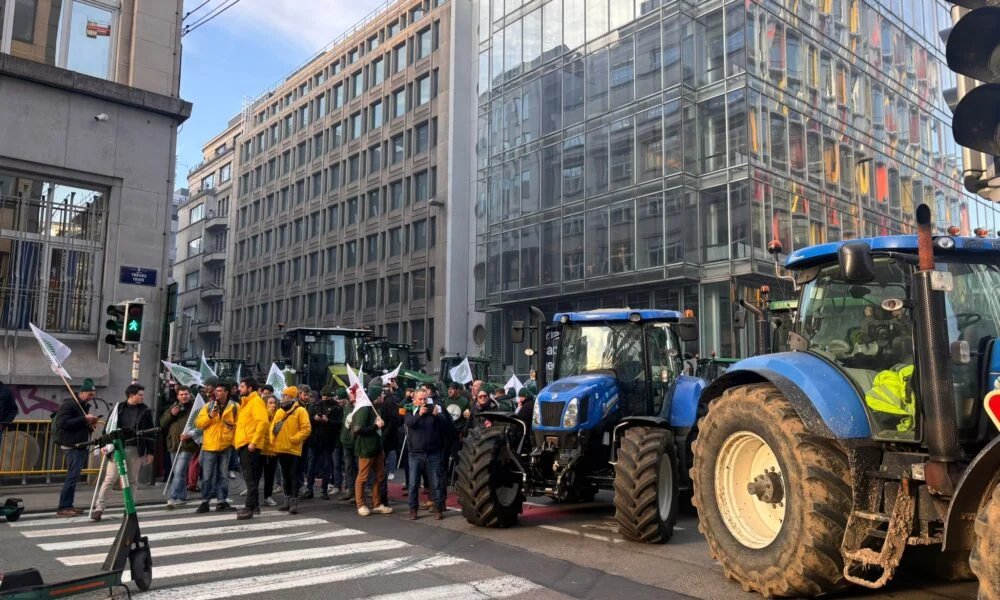
- Domestic political friction: Farmer protests against the deal were visible in Brussels during the summit period, including Romanian participants.
- Limited influence on the final outcome: Romania’s support helps, but the decisive shifts must still come from France or Italy.
What this signals about EU trade politics
Romania’s move highlights a deeper structural split inside the EU:
- Central and Eastern Europe is broadly prioritizing market access, geopolitical alignment, and Commission-led trade strategy.
- Western Europe, particularly France, is demanding stronger “guardrails” for agriculture and enforceable reciprocity.
The EU–Mercosur deal has become a proxy fight over:
- How far the EU is willing to trade openness for political stability.
- Whether trade agreements can survive domestic agricultural backlash.
- How the EU defines “strategic autonomy” in a world of tariffs, supply-chain rivalry, and geopolitical blocs.
What to watch next (January 2026)
Council authorization vote
Whether France or Italy softens will determine if the deal can be signed at all.France’s response to safeguards
Paris has not yet indicated that the revised mechanisms meet its political threshold.Mercosur patience
Further delays increase the risk of diplomatic fallout or loss of momentum.Post-signature enforcement battles
Even if signed, the real fight may shift to how aggressively safeguards and inspections are used—turning enforcement into the EU’s pressure valve for domestic politics.
Bottom line
Romania’s endorsement is a calculated geopolitical alignment, not a symbolic gesture. It reflects where much of Central and Eastern Europe wants EU trade policy to land—open, strategic, and Commission-led—even as Western Europe pushes back. The EU–Mercosur deal is no longer just about trade; it is a live test of how fragmented the EU has become when domestic politics collide with global strategy.