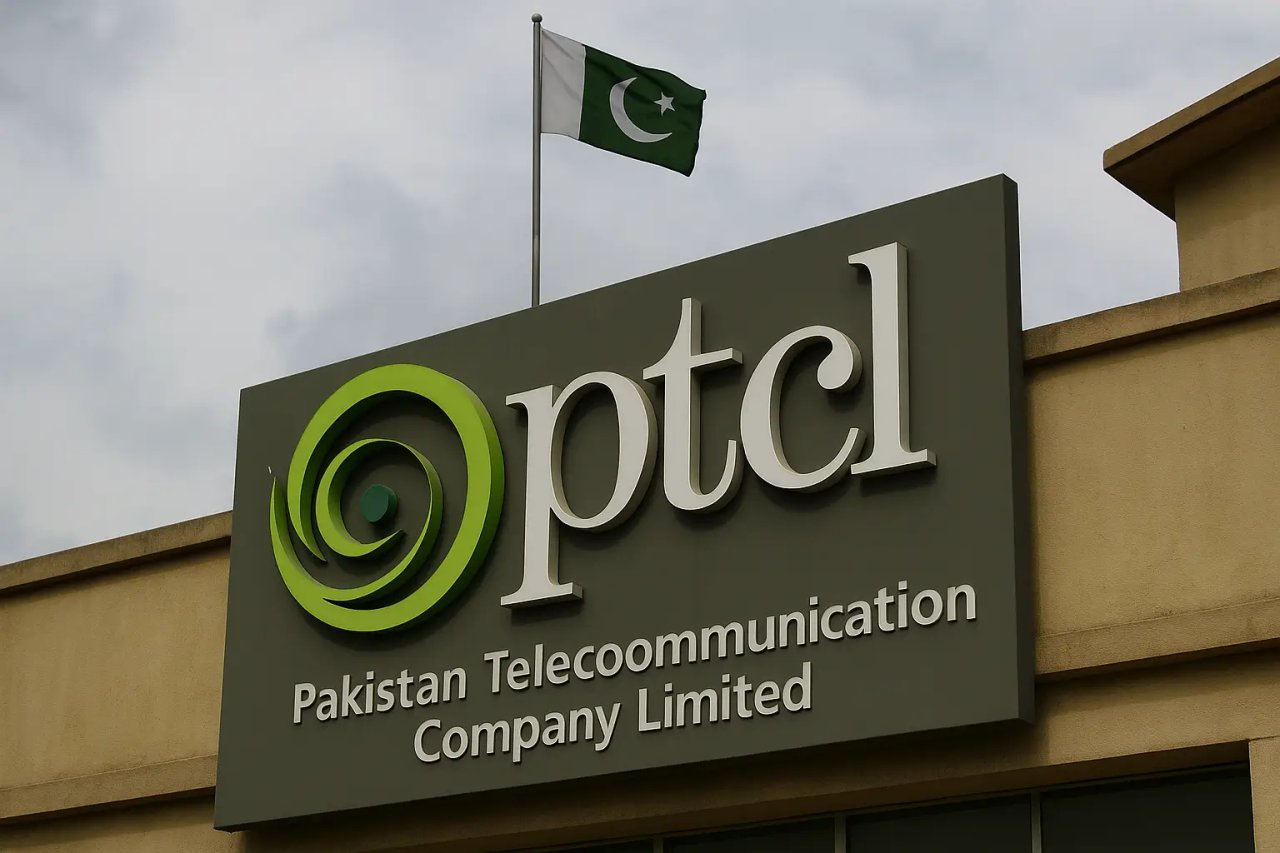
Pakistan Telecommunication Company Limited’s long-gestating takeover of Telenor Pakistan is finally within touching distance, setting up one of the most consequential restructurings of the country’s telecom sector in two decades.
PTCL — 62% owned by the Government of Pakistan and 26% by UAE-based e& (formerly Etisalat) — has shareholder approval to acquire 100% of Telenor Pakistan and its tower unit Orion Towers for PKR 108 billion, on a cash- and debt-free basis. The deal, first announced via a share purchase agreement in December 2023, is being financed largely through a seven-year, IFC-led facility of up to $400 million, one of the largest recent debt packages raised by a Pakistani corporate.
With the Competition Commission of Pakistan (CCP) granting conditional approval in October and PTCL shareholders endorsing both the acquisition and the financing plan on 20 November, the last major hurdle is a green light from the Pakistan Telecommunication Authority (PTA).
Whether this transaction ultimately looks like the creation of a disciplined “national champion” or the entrenchment of a heavily leveraged, state-influenced behemoth in a no-growth market will shape Pakistan’s digital trajectory for years.
A rare big-ticket deal in a stressed market
The transaction values Telenor Pakistan at PKR 108 billion (roughly $380–400 million at recent exchange rates), compared with Telenor Group’s original aspirations for around $1 billion when it first explored an exit.
Analyst work on the CCP’s 147-page order suggests PTCL is paying around 2.25x EV/EBITDA for the business — significantly below the ~5x multiple often seen as fair value for Pakistani mobile assets — and that the tower portfolio alone could justify much of the purchase price, implying something close to a “fire-sale” exit for the Norwegian group.
In a country where FDI into telecoms has fallen sharply amid currency volatility, high interest rates and regulatory uncertainty, such a transaction stands out. Multilateral lenders have repeatedly flagged that high sector-specific taxation, expensive spectrum and policy unpredictability have been eroding investor appetite and limiting network upgrades.
That is precisely what makes the participation of multilaterals so notable.
IFC’s $400 million bet on Pakistan telecom risk
To fund the acquisition, PTCL has secured up to $400 million in seven-year debt from a consortium led by the International Finance Corporation (IFC), including British International Investment (BII) and China’s Silk Road Fund (SRF).
According to IFC and BII disclosures, roughly $224.5 million will come from IFC’s own account and managed funds, with about $175.5 million mobilised from BII and SRF. The loan carries a one-year grace period and is repayable in quarterly instalments thereafter.
IFC has framed the package as a way to support “digital connectivity” by enabling PTCL to acquire and modernise Telenor’s network and towers, expand broadband coverage and improve service quality. In effect, the Washington-based lender and its partners are underwriting sector consolidation in the hope that a better-capitalised, scaled player can sustain capex in an otherwise financially fragile industry.
At the same time, the debt meaningfully raises PTCL’s leverage in a high-rate environment and ties its fortunes more tightly to the performance of a mobile market where aggregate revenues are shrinking.
From four operators to three – and a new No. 2
Once closed, the transaction will combine Ufone — PTCL’s mobile arm, with about 27 million subscribers — and Telenor Pakistan, which serves roughly 43 million customers, into a single operator with around 70 million users.
That would make the merged Ufone–Telenor entity the second-largest player in Pakistan, just shy of Jazz’s 73–74 million subscribers and ahead of Zong’s roughly 50 million. The market would effectively move from four nationwide operators to three.
All of this is happening in a market that is large but financially strained:
- Pakistan counts over 190–200 million telecom users and more than 140 million broadband subscribers.
- Yet sector revenues fell about 16% year-on-year in FY2024-25, declining from PKR 955 billion to PKR 803 billion as operators faced inflation, energy costs, dollar-linked spectrum and equipment payments, and heavy taxation.
Operator ARPUs remain low by regional standards, even after recent tariff increases. Jazz’s mobile ARPU is now around PKR 320–330 per month, Ufone’s about PKR 280–300, with Telenor and Zong still materially lower. The paradox is stark: more data, more users — and less money.
Scale and cost efficiencies are not a luxury; they are a survival strategy.
The synergy story: cost, towers and 5G capacity
On paper, the logic for PTCL and its backer e& is straightforward:
- Network overlap: Ufone and Telenor both operate nationwide networks with overlapping sites, retail outlets and distribution. Consolidation should unlock material operational savings, especially on power and maintenance.
- Towers in-house: The acquisition of Orion Towers brings a sizeable passive infrastructure portfolio into the group, allowing PTCL to internalise tower economics and monetise co-location.
- Spectrum rationalisation: The combined entity will hold multiple spectrum blocks; optimising usage can improve coverage and capacity while reducing duplication.
- 5G readiness: Pakistan is targeting a 5G spectrum auction in 2026. A scaled PTCL group is better positioned than its individual parts to participate meaningfully.
Supporters of the deal argue that a larger, integrated PTCL/Ufone/Telenor platform can sustain long-term investment in fibre, data centres and 5G — something four sub-scale, indebted operators have struggled to do.
Monopoly fears and an unusually muscular regulator
The CCP’s Phase-II approval in October came with “extensive conditions” intended to preserve competition, reflecting concerns over vertical integration and reduced market rivalry.
Key elements include:
- Independent monitoring for five years with quarterly audits.
- Governance separation across PTCL’s wholesale backbone, towers and the merged mobile entity.
- Non-discriminatory access obligations to ensure rivals can access ducts, dark fibre, towers and wholesale bandwidth on fair terms.
The CCP order captures a policy dilemma: Pakistan wants a player large enough to invest, but not so dominant that it can tilt the market. Enforcement capacity will determine which instinct prevails.
A sector under structural pressure
PTCL itself reported a near PKR 10 billion loss for the first half of 2025, driven by FX losses, energy costs and rising finance charges.
Across the industry:
- Telecom revenues are falling despite record data usage.
- Operators are squeezed by high spectrum fees, heavy taxation and dollar-linked costs.
- Regulators warn that only a minority of users have 5G-ready devices, with a large share still reliant on feature phones.
Multilateral financing into telecoms has slowed, with lenders emphasising the need for predictable policy and rational taxation to support network expansion. The PTCL–Telenor deal is both a response to this pressure and a gamble on overcoming it.
National champion or “too big to fail”?
Proponents say Pakistan is converging toward the global pattern where three operators dominate mature markets. Consolidation, they argue, will reduce wasteful duplication, create a credible challenger to Jazz, and strengthen the backbone for Digital Pakistan.
Critics counter that:
- A heavily indebted PTCL could become “too strategic to fail.”
- Vertical integration may enable subtle discrimination against competitors.
- Consolidation alone cannot fix structural distortions such as high taxes and expensive spectrum.
For multilaterals, the hope is that a scaled PTCL can be a disciplined, investable platform. For regulators and consumers, the question is whether competition and affordability can be protected in the process.
The test ahead
PTCL appears to have secured Telenor Pakistan at a favourable valuation, supported by long-term capital from IFC, BII and SRF. It advances Islamabad’s ambition to shape a domestically headquartered digital champion backed by a global telecom operator.
The challenge begins after closing.
If PTCT can integrate networks efficiently, deliver genuine cost savings, invest robustly in 4G/5G and fibre, and comply with regulatory safeguards, the deal could mark a shift toward healthier competition on quality rather than price wars.
If not — if governance frictions persist, if dominance is abused in subtle ways, or if capex ambitions falter — Pakistan may find it has traded one form of telecom fragility for another.
Either outcome will influence how multilaterals price Pakistan’s risk, how credibly regulators can oversee powerful incumbents, and how far Pakistan can push its digital ambitions amid macroeconomic constraints.