
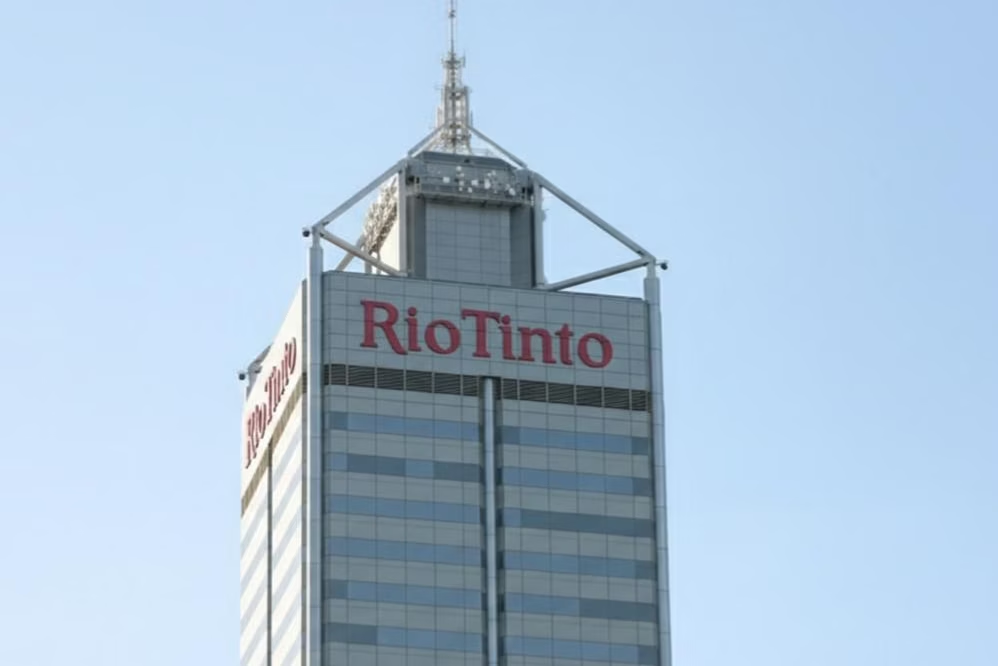
Rio Tinto has entered early-stage discussions about a possible acquisition of Glencore, the companies said, a move that — if agreed — would create the world’s largest mining company with a combined market value of nearly $207 billion.
The disclosure triggers a formal countdown under the UK Takeover Code. Rio has until 5:00 p.m. London time on Feb. 5, 2026 to announce a firm intention to make an offer or walk away, unless the Takeover Panel grants an extension.
Both companies stressed there is no certainty any transaction will be agreed. Glencore said Rio could pursue an offer for “some or all” of the business, while Rio said the parties’ current expectation is that any merger would be implemented via a court-sanctioned structure under which Rio would acquire Glencore.
The talks immediately split investor sentiment. Glencore shares jumped on the prospect of a premium, while Rio’s shares fell as investors weighed the risk of overpayment and the execution challenge of combining two complex, global operations spanning iron ore, copper, coal and commodity trading.
Trading arm and coal at the centre of debate
People familiar with the discussions told Reuters that a key attraction for Rio is Glencore’s “marketing” business — one of the world’s biggest commodity trading operations — which can generate significant earnings through price cycles and physical supply-chain reach. That same trading footprint, however, is expected to draw heightened scrutiny from regulators and policymakers focused on market power, transparency and compliance risk.
Coal is the other pivotal fault line. Glencore remains a major coal producer, while Rio has previously stepped back from coal exposure. Any deal design is expected to be shaped by how the combined group would handle coal assets, given investor ESG mandates and likely political sensitivity in approval processes.
Rivals watching, but BHP not moving—so far
One immediate question for markets is whether a rival could disrupt the talks. Australia’s BHP, long viewed as the most credible “spoiler,” is not preparing a counterbid and is instead expected to wait out the Rio–Glencore discussions, Reuters reported, citing sources. BHP’s position reduces the near-term likelihood of a bidding war, but it does not remove the risk of a late-stage competitive move if talks progress.
Why the geopolitics matter
The prospective tie-up is landing amid intensifying global competition for copper and other energy-transition metals. A combined Rio–Glencore would be a larger, more influential supplier into electrification and data-centre buildouts, potentially amplifying political interest in how output and investment are steered across jurisdictions.
Any transaction would likely face multi-jurisdiction reviews, including national-interest considerations in key producing countries and competition scrutiny where overlaps are material. For Rio, which has major operations in Australia and elsewhere, the political dimension is expected to be as consequential as the financing and valuation debate.
Next inflection point: Feb. 5
With the Takeover Code deadline now public, the next three weeks are expected to concentrate negotiations over price, structure and potential remedies or carve-outs. If Rio cannot reach terms, it can declare it does not intend to make an offer — a step that typically limits the ability to return quickly under UK takeover rules.